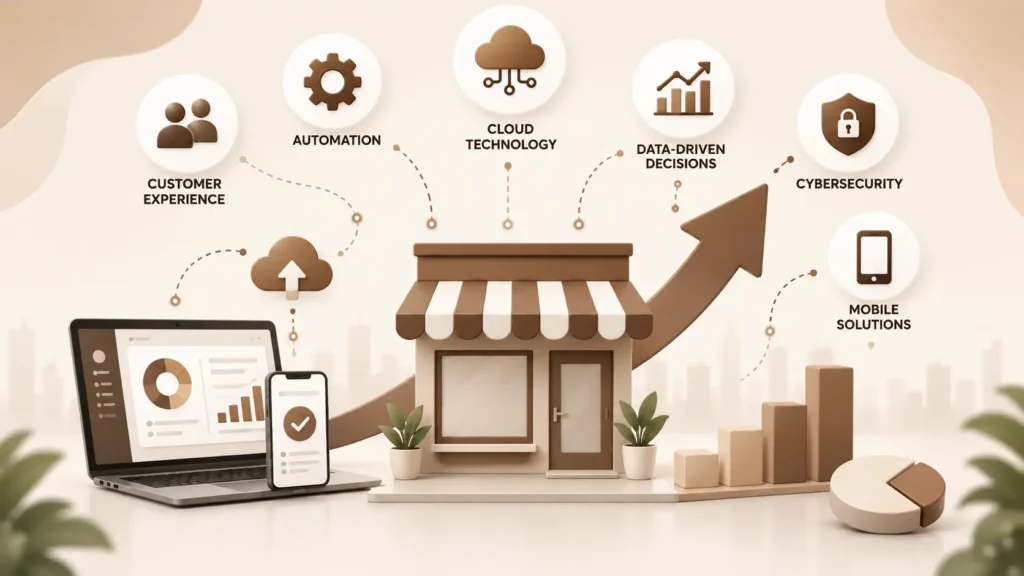
Digital Transformation Trends for Small Business
Small businesses today are no longer competing only with the shop next door — they’re competing with brands online, across cities and even countries. As a freelance digital marketer in Palakkad, I regularly meet local business owners who feel overwhelmed by how fast technology is changing the way customers shop, search, and make decisions. Digital transformation isn’t just for large corporations anymore; it’s becoming essential for small businesses that want to survive and grow. In this blog, I’ll break down the key digital transformation trends every small business owner should know about this year.
What Does Digital Transformation Actually Mean?
Digital transformation simply means using digital tools and technology to improve how a business operates, sells, and connects with customers. It’s not about adopting every new app or platform — it’s about choosing the right tools that genuinely make your business more efficient and accessible.
1. Mobile-First Customer Experience
Most customers now discover and interact with businesses through their phones before anything else.
- Websites need to load fast and look clean on mobile screens.
- Features like placing orders, booking appointments, and making payments need to work smoothly on a small screen.
- A poor mobile experience often leads customers straight to a competitor.
2. Cloud-Based Business Tools
Small businesses are shifting away from paper records and local storage toward cloud systems.
- Cloud accounting and inventory tools allow real-time tracking from anywhere.
- Teams can collaborate remotely without depending on a single office system.
- Cloud storage reduces the risk of losing important business data.
3. AI-Powered Customer Support
Automated tools are helping small businesses respond to customers faster, even outside working hours.
- Chatbots handle common questions instantly, improving response time.
- AI tools help sort and prioritize customer inquiries.
- This frees up business owners to focus on more complex customer needs.
4. Social Commerce and Direct Selling
Social media platforms are turning into full shopping destinations, not just marketing spaces.
- Instagram and Facebook shops allow direct purchases without leaving the app.
- Short videos showcasing products often convert better than traditional ads.
- Local businesses can reach nearby customers through targeted social promotions.
5. Data-Driven Decision Making
Guesswork is being replaced by simple analytics that small businesses can actually understand and use.
- Website and social media analytics reveal what content customers actually engage with.
- Sales data helps identify best-selling products and peak buying times.
- Even basic tracking tools can guide smarter marketing budgets.
6. Digital Payments and Contactless Transactions
Cash-only businesses are increasingly limiting their own growth.
- UPI, digital wallets, and card payments are now customer expectations, not extras.
- Offering multiple payment options reduces lost sales at checkout.
- Digital payment records also simplify accounting and tax filing.
7. Local SEO and Online Visibility
Being found online matters just as much as having a good product or service.
- A well-optimized Google Business Profile helps nearby customers find you easily.
- Customer reviews strongly influence local buying decisions.
- Ranking for location-based searches brings consistent, low-cost traffic.
8. Personalized Marketing on a Budget
Personalization isn’t limited to big brands with big budgets anymore.
- Simple email segmentation helps send relevant offers to the right customers.
- WhatsApp business tools allow personalized follow-ups at scale.
- Small, thoughtful touches often build stronger customer loyalty than generic discounts.
Why Small Businesses in Palakkad Should Pay Attention
A lot of local business owners think going digital will cost too much or feel too technical, but in most cases, that’s just a misconception. As a freelance digital marketer in Palakkad, I’ve helped small businesses take simple, affordable steps — like setting up a mobile-friendly website, improving their Google presence, or starting basic social selling — that led to real, measurable growth.
If you’re just getting started, here are a few simple steps worth following:
- Start with one or two tools that solve your biggest daily challenge.
- Focus on mobile experience before investing in anything else.
- Set up your Google Business Profile properly and keep it updated.
- Track a few simple numbers monthly to see what’s actually working.
Final Thoughts
Digital transformation doesn’t require a complete business overhaul overnight. It’s about making steady, practical changes that improve customer experience and business efficiency over time. From mobile-friendly websites to smarter payment systems and local SEO, small businesses that adapt gradually often see the biggest long-term rewards.
If you’re a small business owner unsure where to begin, working with a freelance digital marketer in Palakkad can help you identify which changes will actually move the needle for your business. Instead of chasing every new trend, the right guidance helps you focus on what truly fits your goals, budget, and customers — building a stronger digital presence step by step.